Atlas DataFlow
Interactive platform for publishing dataset studies and predictive experiences with contract-governed releases.
Transforms classification, regression, and forecasting studies into a public catalog with metrics, visualizations, documentation, and interactive inference where applicable
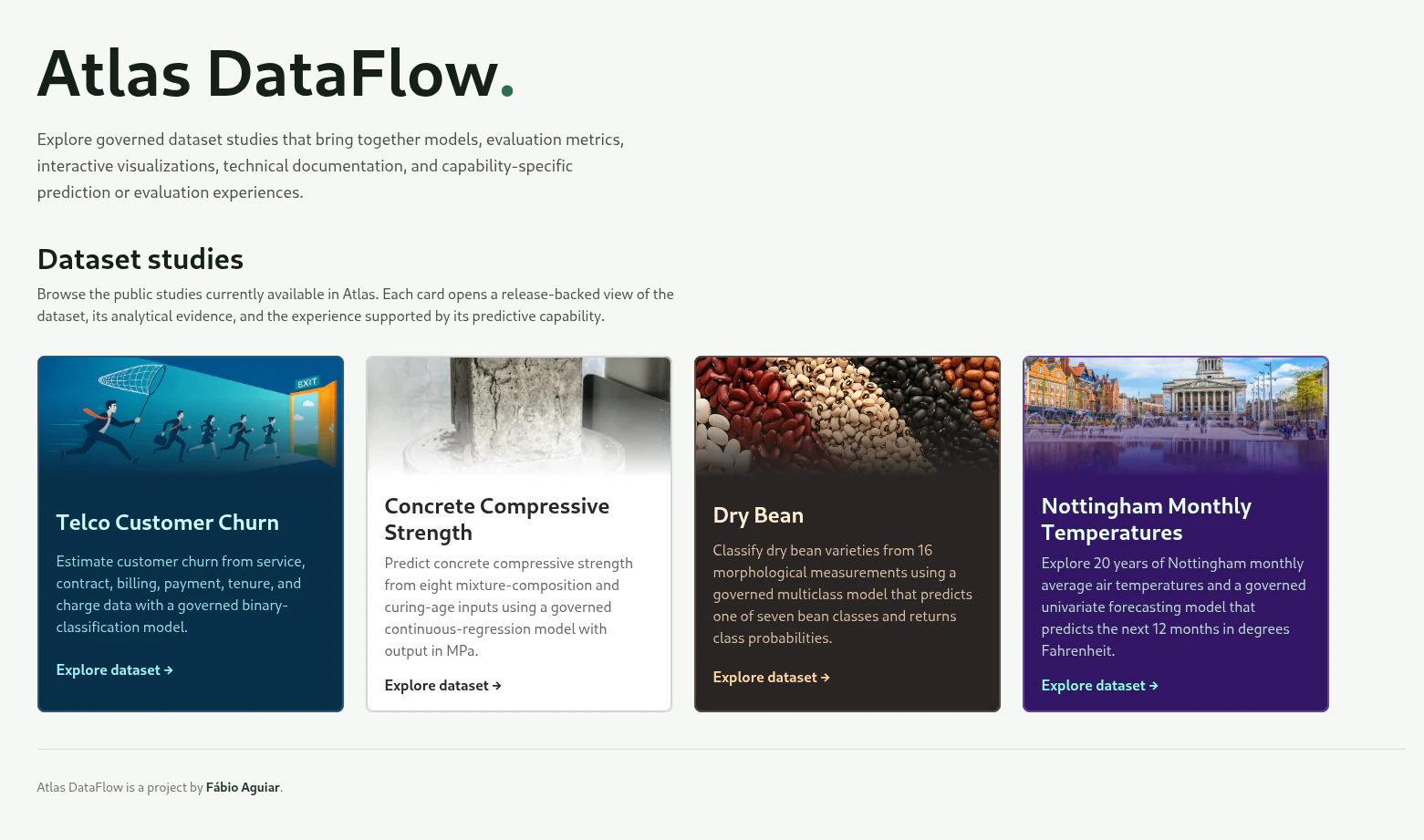
What the project offers
In Atlas, each published dataset receives its own detail page. Visitors can explore the problem being studied, understand the target, review performance metrics, navigate analytical visualizations, and read the technical documentation behind the study. When supported by the study, the project also provides an interactive inference experience.
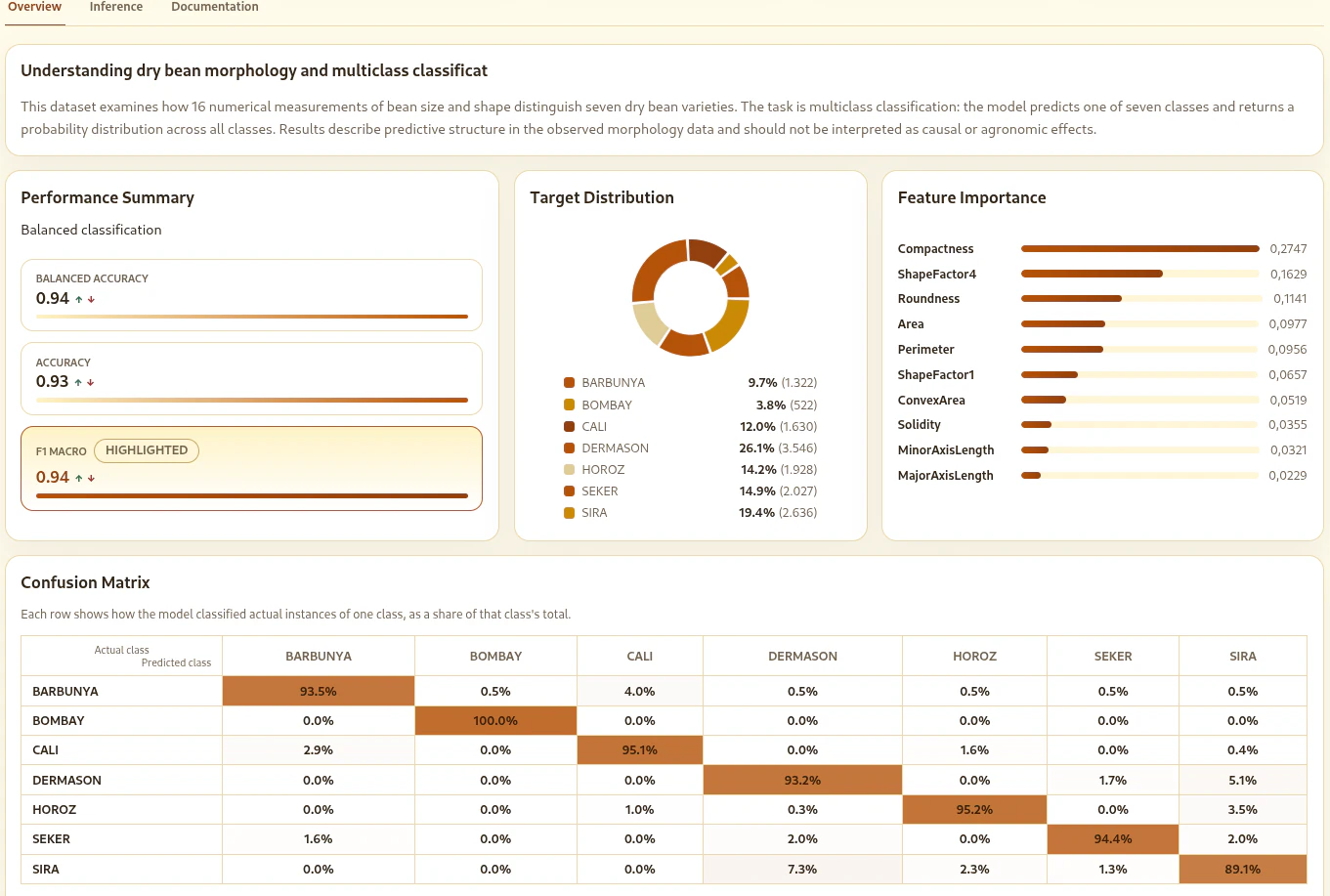
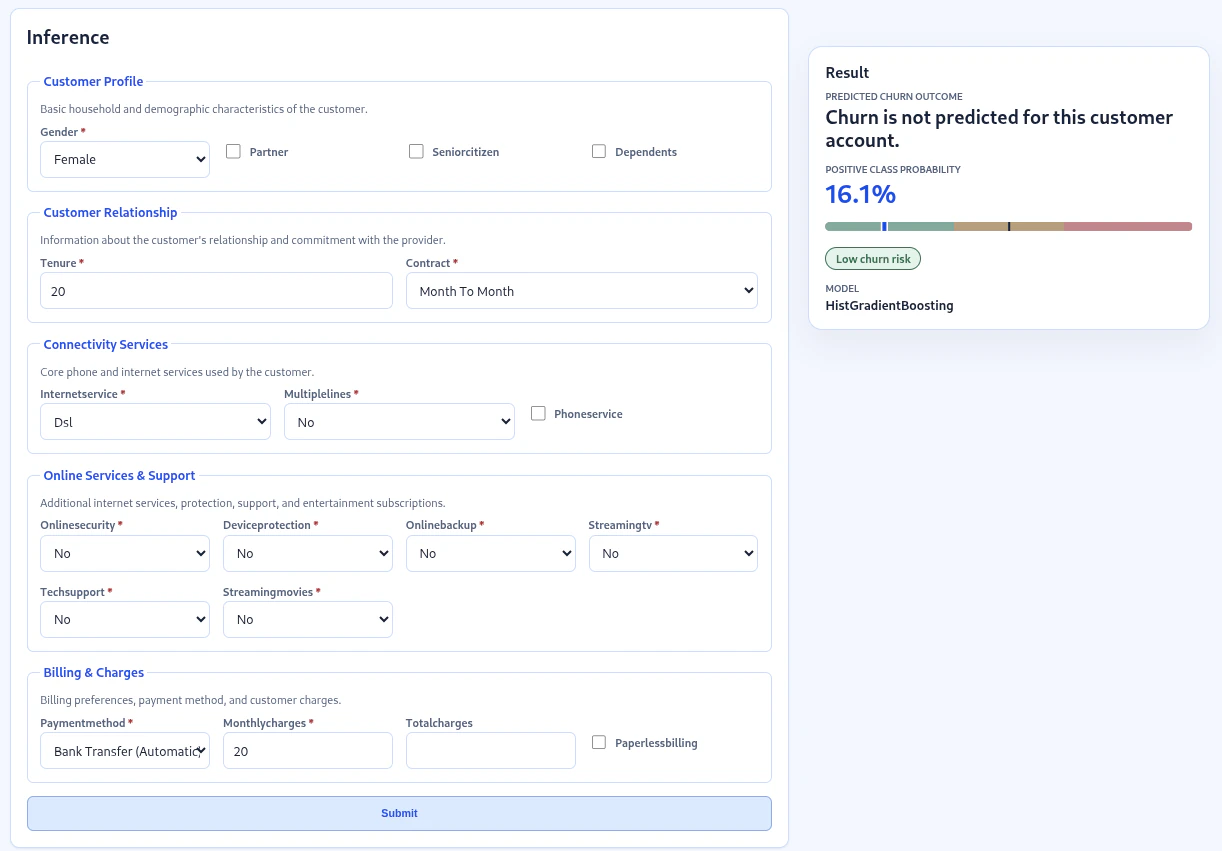
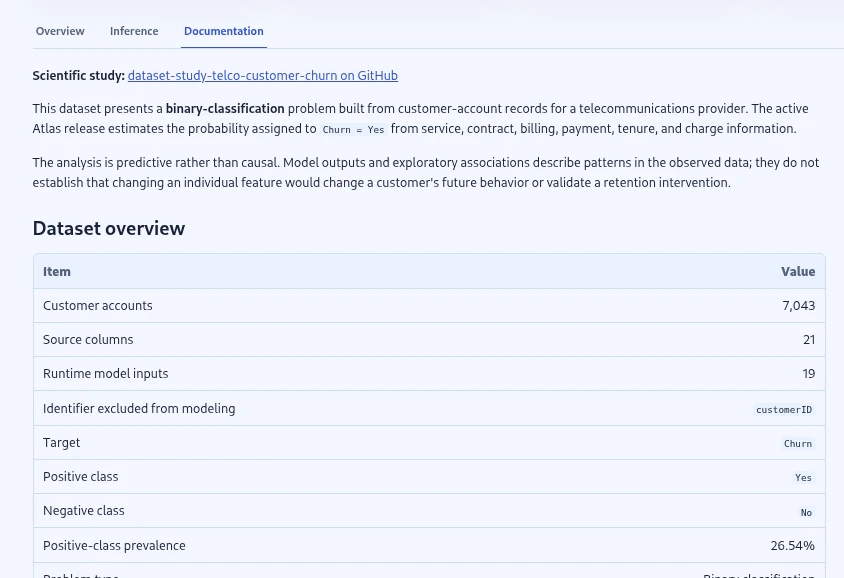
How it works
Behind the public interface, Atlas connects integration notebooks, validation routines, contracts, evidence, candidates, and immutable releases. This structure keeps each study traceable and helps align public content, model behavior, metrics, and runtime without depending on the original notebooks in production.
Current scope
The first public version of Atlas already covers four problem families:
- binary classification
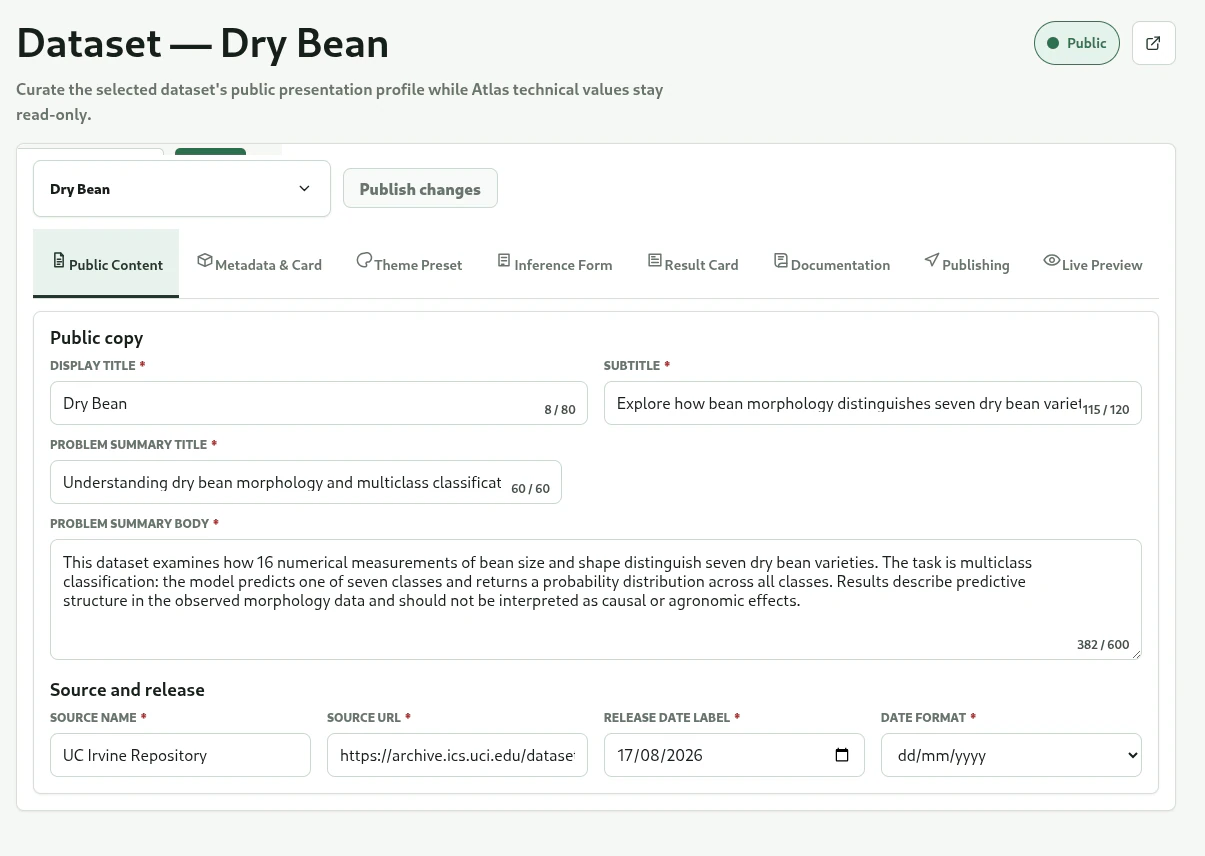
- multiclass classification
- continuous regression
- univariate forecasting
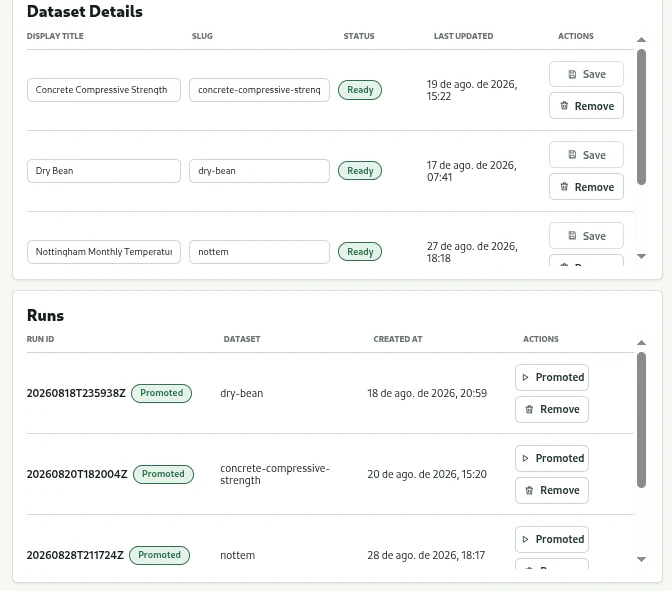
These capabilities are currently represented by the Telco Customer Churn, Dry Bean, Concrete Compressive Strength, and Nottingham Monthly Temperatures studies.
Why this project matters
Atlas DataFlow is where my interests in data analysis, machine learning, and software engineering come together. It works both as a study platform and as a portfolio project, allowing me to publish analyses with more structure, usability, and governance than an isolated collection of notebooks.